Match the carrier system
Aqueous formulations support graphite and silicon systems, while NMP-based products support LFP and NMC applications. Additional process routes are in development.

Lithium-ion battery solutions
MOLECULAR REBAR® carbon nanotube formulations designed around electrode chemistry, carrier system, manufacturing process, and performance target.
Why it matters
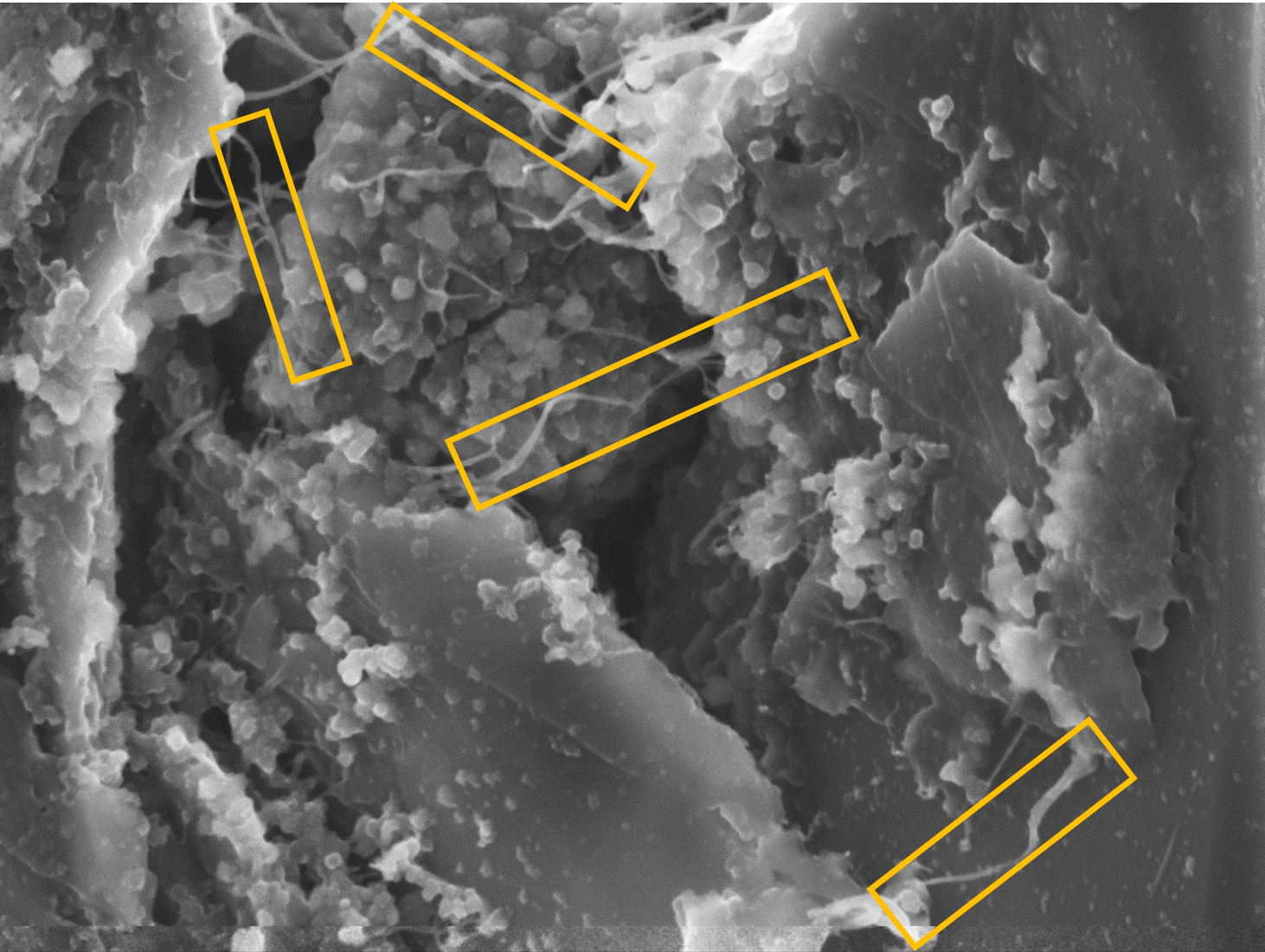
BDS develops application-ready CNT formulations for aqueous, NMP-based, dry-process, and other lithium-ion manufacturing routes. The goal is to create continuous conductive pathways that support faster charging, high-rate capability, and efficient use of inactive material while fitting the customer’s chemistry and process.
Review original performance data →Designed for the electrode system
BDS matches the nanotube network, carrier system, loading level, and integration plan to the chemistry and manufacturing route.
Aqueous formulations support graphite and silicon systems, while NMP-based products support LFP and NMC applications. Additional process routes are in development.
Discrete, high-aspect-ratio nanotubes create long pathways through active material when they are properly formulated and integrated.
A continuous conductive network helps current continue to flow as charge and discharge rates increase.
BDS supports formulation, integration, testing, and supply from development work through commercial production formats.
The BDS process
Separate bundled CNT into discrete, high-aspect-ratio structures.
Maintain tube integrity and surface behavior through processing.
Tailor the dispersion for the target chemistry and process.
Create conductive pathways through battery active material.
Explore CNT technology
Technical FAQ
High-aspect-ratio CNT can create long conductive pathways through active material, supporting high-rate performance with an efficient conductive network.
BDS offers aqueous formulations for graphite and silicon systems and NMP-based formulations for LFP and NMC applications, with additional manufacturing routes in development.
Yes. BDS provides formulation, integration, battery-testing, and manufacturing support from development work through commercial supply.
Share your electrode chemistry, carrier system, manufacturing process, and performance target with the BDS technical team to identify the appropriate starting formulation.
Technical content reviewed by the Black Diamond Structures battery development team. Last updated September 2026.
Working together
Strategic relationships that strengthen our materials expertise, production capabilities, and support for battery manufacturers.
Start a technical conversation
Bring us your chemistry, production process, and performance target.
Talk to technical sales →